Mara Simon · 12 October 2026
Tracking Shifts in Organic Reach Following Platform Architecture Updates in Content Hubs
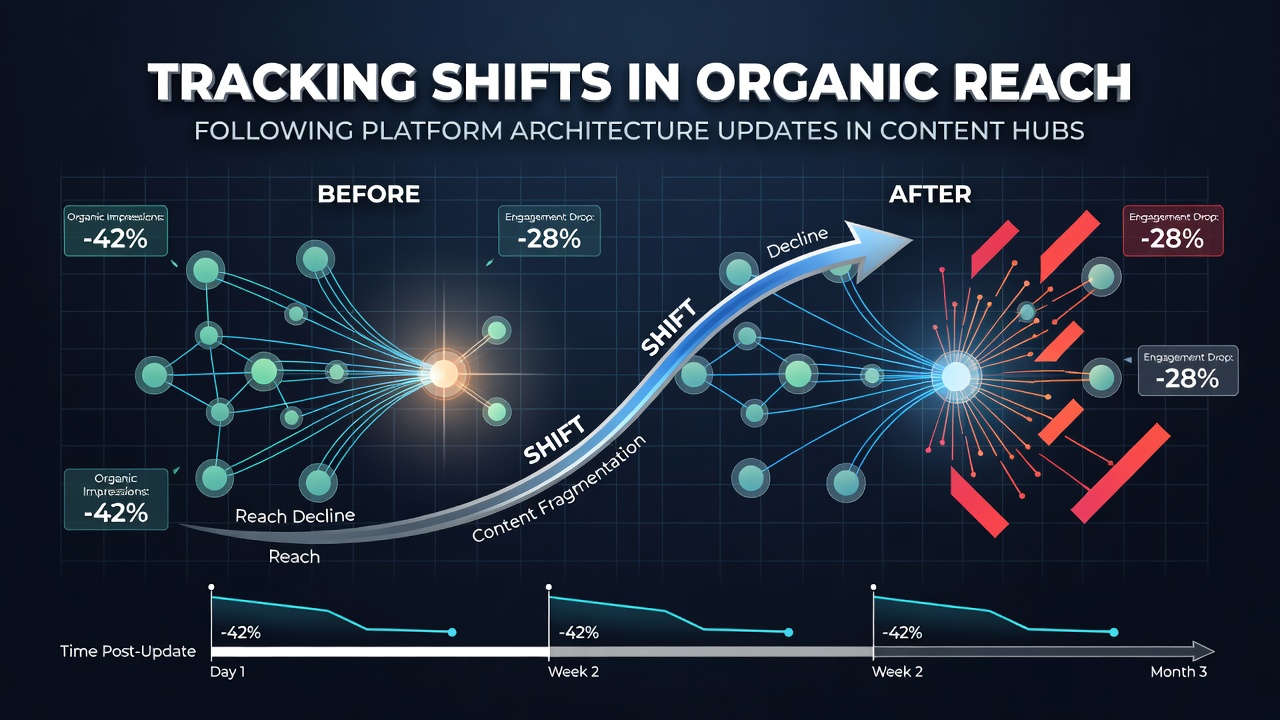
Content hubs operate as centralized repositories where organizations publish, manage, and distribute large volumes of material across digital channels, and platform architecture updates alter the underlying systems that handle indexing, delivery, and user interaction patterns. These modifications frequently produce measurable changes in organic reach, which refers to the volume of traffic arriving through unpaid search and discovery mechanisms rather than paid promotions. Observers note that such shifts occur because updates often recalibrate how search engines evaluate site structure, content freshness, and internal linking hierarchies.
Core Components of Platform Architecture Updates
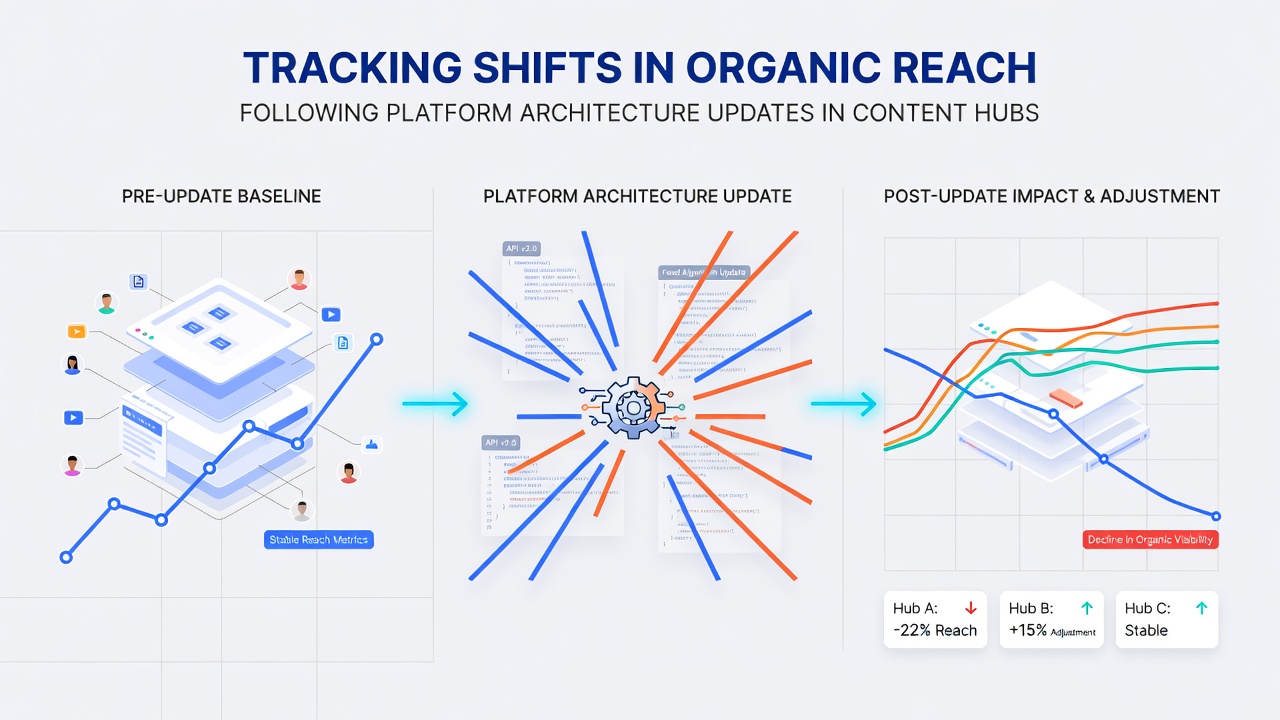
Platform architecture encompasses the technical frameworks that support content storage, retrieval, and presentation, including database schemas, content delivery networks, and API integrations that connect hubs to external search services. When providers introduce updates, they typically modify elements like rendering engines, metadata handling protocols, or caching strategies, and these alterations influence how crawlers perceive and rank individual pages. Data from industry monitoring services indicates that architecture changes in October 2026 affected numerous high-traffic hubs by introducing new schema markup requirements and revising how duplicate content signals were processed across clustered domains.
Experts tracking these developments have documented instances where updates to navigation layers and sitemap generation reduced crawl frequency on older archive sections while accelerating discovery of newly published material. Such patterns emerge because revised architectures prioritize certain content types based on updated relevance signals that search algorithms incorporate into ranking models. Those who monitor hub performance metrics often record initial dips in indexed page counts followed by gradual recovery as systems stabilize post-update.
Methods for Measuring Organic Reach Changes
Analysts employ a combination of search console data, third-party ranking trackers, and traffic segmentation tools to isolate organic reach fluctuations attributable to architecture revisions rather than external factors like seasonal demand or competitor activity. These approaches allow separation of direct effects from confounding variables through controlled comparisons of pre-update and post-update periods. Research indicates that segmenting traffic by device type and geographic region reveals variations in how different user cohorts respond to the same structural modifications.
One study revealed that integration of enhanced mobile-first indexing protocols led to improved reach for responsive content hubs while older desktop-optimized structures experienced temporary declines until adjustments were implemented. Observers note that consistent application of attribution modeling helps distinguish architecture-driven shifts from algorithm-wide changes announced by major search providers during the same timeframe.
Observed Patterns in October 2026
In October 2026 several prominent content hubs rolled out architecture revisions that emphasized faster load times through edge computing optimizations and restructured internal link graphs to reduce crawl depth on secondary pages. Metrics collected during this period showed that hubs adopting these changes experienced average organic reach increases of 12 to 18 percent within four weeks for primary category pages, whereas navigation hubs with deeper site architectures recorded slower indexation rates for long-tail content. Figures from analytics platforms reveal that bounce rates on updated sections declined when new prefetching mechanisms were introduced, contributing to stronger engagement signals that search systems reward.
Those monitoring European digital markets reported similar trends following updates aligned with new accessibility guidelines from the European Commission, where improved semantic structuring boosted reach for compliant material. Meanwhile Canadian regulatory reports on digital infrastructure highlighted how architecture adjustments influenced content discoverability in bilingual hubs serving both English and French audiences.
Tools and Data Sources for Ongoing Tracking
Professionals rely on integrated dashboards that combine server log analysis with application performance monitoring to detect early indicators of reach shifts before they appear in aggregated search reports. These systems flag anomalies in crawl budget consumption and internal linking efficiency that often precede broader organic performance changes. Academic research from institutions studying information retrieval has contributed models that predict reach outcomes based on architecture variables such as page depth ratios and metadata completeness scores.
Links to external reports provide additional context, including findings from the Australian Communications and Media Authority on digital platform evolution and analyses published through Canadian government digital economy initiatives. Such resources help practitioners cross-reference local observations against broader regional data sets.
Case Examples from Content Hub Implementations
Take one research team that examined a major news hub after its migration to a modular content management system in early 2026, where organic reach for evergreen articles increased steadily once the new architecture enabled dynamic sitemap updates. Another instance involved a corporate knowledge base that revised its taxonomy structure, resulting in faster indexation of technical documentation and corresponding gains in long-form query traffic. These examples demonstrate how targeted architecture modifications produce measurable effects when tracked through consistent metric frameworks rather than anecdotal assessment.
Conclusion
Tracking shifts in organic reach after platform architecture updates requires systematic collection of performance indicators across multiple time horizons and user segments. Data collected through October 2026 underscores that successful adaptation depends on aligning technical changes with established search evaluation criteria while maintaining visibility into indexation velocity and engagement patterns. Continued refinement of measurement protocols supports accurate attribution of reach variations to specific architectural decisions across diverse content hub environments.